The Moon Has Never Once Checked In With Treasury
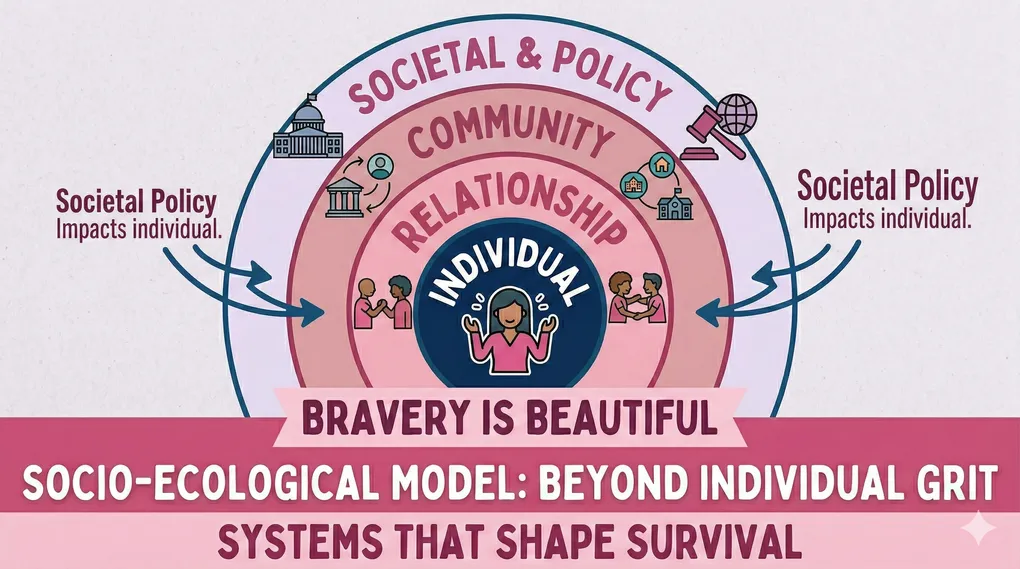
Hello Friends, This post is a little different from the last few. I have asked Stella if I can showcase her substack article that focuses on politicians' attitudes to environmental policy. This piece is a mirror held up to the excuses often made by those in power. It reminds us that public servants work for the people, and our collective contribution to society is meant to ensure we are all looked after. The same logic applies to our Tamariki (children). When we see sobering statistics about child wellbeing, the response is often to say that social workers are overwhelmed. But we must ask: how does policy create these statistics to begin with? A quick google will show that recent data shows significant gaps in how we protect and nurture our children in Aotearoa: Overall Wellbeing: New Zealand recently ranked 32nd out of 36 developed nations for child wellbeing. Mental Health: We rank 36th—last—for child and youth mental health, with the highest youth suicide rate among those nations. Physical Health & Safety: Our nation has the second-highest rate of bullying and the third-highest percentage of overweight children among peer countries. Poverty and Education: We rank 19th out of 39 countries in child poverty and 25th out of 41 for educational skills. We must demand a system that prioritizes our Tamariki (children) and wellbeing over fiscal convenience. So a big special thank you to Stella for allowing me to bring these words to the Maia Ataahua community. You have encapsulated the purpose of Project Hannah an a tangeble way. Enjoy the following read and if you would like to contribute your own thoughts….let me know! And follow Stella on Entangled Curiosities over on substack. Love you, Zoe
Source: Entangled Curiosities
The Moon Has Never Once Checked In With Treasury
Salvaging Politics from Politics
By Stella
Dear Curious Minds
“You’d think I’m flying to Bali”. I’m writing this from Hastings. I eventually discovered the eye-watering price of those flights is because it is Art Deco weekend. Silly me. That explains the airfares. It does not make me feel better about them. Uber from Napier Airport to Hastings was estimated at $230, with a sheepish warning that prices are higher than usual. Sure. Capitalism, as ever, is really committed to the bit. No, I did not book that Uber. Thank you for being here, I appreciate you.
This week, I read a RNZ headline saying that party leaders want to ‘take politics out of planning for weather events’.
I had to put my tea down. Slowly. I needed both hands free for gesturing at nobody in particular.
You cannot take politics out of planning for weather events. Planning, prevention, recovery, adaptation, the decision about which community gets rebuilt first and which gets quietly handed an uninsurability letter.. that is politics. That is the whole point of it. The only things you could meaningfully remove from the process are party politics and fragile ego, and those, it turns out, are not what anyone means when they say the word.
I wonder if we can ever unfuck the word “politics”. It has been so thoroughly mugged and violated because it appears, in common use, something like cynical manoeuvring, tribal point-scoring, the opposite of getting things done; that anyone who asks a structural question can be dismissed as “making it political.” Hold on, so not naming a thing is the opposite of that? Or suggesting that is innocent because it’s not political?
A brief note before I go further: I’m about to use left, centre, right. You know, the shorthand most of us were handed. It’s imprecise. Politics is closer to a sphere than a line, and the contradictions within tribes matter as much as the ones between them. More on that another time.
The pretending has a preferred aesthetic. It is calm. It is measured. It speaks in full sentences about complexity and the importance of not letting the perfect be the enemy of the good. Oh, so professional and mature. But what I hear underneath that, most of the time, is: this level of urgency makes me uncomfortable, and I would like you to turn it down. Calm and radical are not opposites, and they are not even on the same axis. And it is not coincidental that the demand to lower the temperature lands hardest on women of colour. The bold, the firm, the assertive, the rightfully enraged woman has always made institutions nervous. Not because her anger is unreasonable, but because it is ungovernable. The management of women’s tone is a control mechanism that wears the emperor’s robe of ‘professionalism’. It is about whose discomfort we have agreed to prioritise over the substance of what is actually being said.
But gosh, is it effective. The discomfort runs so deep in our social architectural construct that I still catch myself flinching at it from time to time. That’s the mirror I find hardest to look at squarely.
I had lunch today with two women whose stories the world would describe as ‘resilient’. I’ve written about my reservations about this word before. “Resilient” is what you call someone when you want to admire what they survived without having to reckon with why they had to survive it. I am increasingly averse to using this word, as it allows us to focus on the individual capabilities while letting systemic issues off the hook.
Instead, my long description is that each of these women has a story worth at least one feature-length documentary. Probably two. Definitely several books. Their story is the kind of material that makes you sit quietly for a moment after hearing it, recalibrating what you thought you knew about endurance.
We talked about the habit of belittling our own stories. We talked about women written by men(so evident for any serious reader). No woman in my circle uttered the classic line “what do we do now?” beyond the age of about six with innocence, wide-eyed, waiting for direction. We are either already doing the thing, have a plan A, B, or C forming while the question is still being asked, or have quietly decided the thing(person) is not worth it and moved on. Men write women waiting. Women, in the main, get things done. If you are not these kind of women, they don’t tend to stay in my circle for a long time.
And yet. Sitting there, I caught myself doing the thing I always catch myself doing. Feeling a small, involuntary tug of discomfort at the moments when I shrugged off compliments and validation. Evidence of how deep the training goes. Even now.
I thought about that later, reading back through the RNZ coverage of the floods.
In the first two months of this year, New Zealand declared at least 70 days of local states of emergency. In all of 2002, there were four. The Emergency Management Minister responded to this by telling RNZ he had “no interest getting into a climate change debate” and would rather “let the scientists work on that one.” This is a very particular kind of politics: the politics of managed non-response. Political scientists call it non-decision making: power exercised not in what gets decided but in what never reaches the agenda. In climate governance, it has a more recent name called ‘delayism’. Because outright climate change denial became too niche finally, it morphed into an endless choreography of commissions, “mature conversations,” and complexity-acknowledgment that achieves the same outcome while sounding considerably more sensible.
Luxon says infrastructure should “sit outside” politics. Hipkins won’t commit to reinstating the cancelled $6 billion climate resilience fund, calls it “incredibly complicated,” says it’s “the sort of thing you need to work through in government.” Both are telling us, in different registers, that the urgency we feel is slightly excessive for their comfort levels. This is not two parties failing to agree. This is two parties successfully agreeing on the pace loud and clear.
Taking politics outside of these things is a bit like asking the moon to hold its phases until the fiscal position improves. Do we expect the moon to check in with Treasury? Everyone who celebrated Lunar New Year this week, and everyone who uses maramataka, and every coastal farmer, will question what you are smoking with such expectation.
Every election cycle, the same narrative reassembles: don’t frighten the centrists. The moderates are coming. Tone it down, and they’ll meet you in the middle.
We have a recent and specific local case study in what happens when you try. In 2023, Labour deliberately pivoted to the centre: capital gains tax talks gone, wealth tax shelved, environmental policies delayed (there is a scene about going for centre votes in the documentary ‘Prime Minister’, and I almost shouted out of pure frustration). The calculation was rational enough on paper. We know what happened, though. Labour’s vote collapsed from 50 per cent to 26.9 per cent. The worst defeat of a sitting government since MMP was introduced.
Here is what that looked like on the ground. In Māngere, 24,167 people voted Labour in 2020. In 2023, 12,077 did. In my old town of Manurewa: 22,137 down to 10,409. The centrist voters Labour went to woo did not arrive in sufficient numbers to replace the working-class communities who, given what the party had become, stayed home. Yes, a grudge towards Ardern as a leader existed even from its traditional base. But the lukewarm standing for nothing in particular was not going to win them back. Post-election, Labour MPs said it on the record: focusing on centrist voters rather than the working class had been a mistake.
The self-claimed centrists, if they are not already disturbed by the visible, material harm being done to their communities, are not going to adopt your values because you moderated your tone. If the ambush of Pay Equity bill, series of environmental safeguard rollbacks that made us international news for all the wrong reasons, unchecked racist rhetorics of the ministers, the 40,000 beneficiaries with retrospectively legislated debts, many of them survivors of state abuse, weren’t enough to anger these people to have a clear intention of NOT voting for the current government yet, they really are not centrists. They have seen the same things you have seen. They have made their assessment.
But here is the harder question: at what point does knowing all of this and still softening, still choosing the careful word over the true one in certain rooms make us part of the problem? At what point does that stop being political nous and become complicity? I don’t think we’re particularly good at catching that moment and acknowledging it. I know I’m not.
*The demand to be calm, professional, and balanced asks you to find the other side of cruelty and yes, I’m using that word deliberately, because Dr Bex**** used it first and used it accurately — in legislation introduced under urgency, with submissions closing at midnight, to retroactively validate twenty years of unlawful debt clawbacks from people on supplementary payments that barely covered the gap between their benefit and the actual cost of being alive. The High Court ruled the clawbacks unlawful. The government’s response was to pass a bill to make them lawful, retroactively, because reviewing the debts would cost $63 million. This is from the same government that cancelled a $6 billion climate resilience fund.***
The “balance” framing would like you to present both sides of that. I decline.
Tomorrow I’ll walk the Art Deco streets of a city rebuilt by deliberate political will after catastrophe, now celebrated as heritage, visited by people who discover on checking their airfare that the market has noticed and adjusted accordingly. The same region was torn apart by Cyclone Gabrielle in 2023. The same conversations about funding and managed retreat are still happening. Slowly, carefully, with appropriate acknowledgment of complexity.
The absence of political will doesn’t make the disaster less political. It just means the rubble and rot stay longer, and someone eventually builds something cheaper on top of it, and we call it moving on.
The women at lunch today were not waiting for permission to tell their stories. They were already doing approximately seventeen other things first.
That’s just not having the luxury of waiting, rather than what the world like calling resilience.
We are not going to make meaningful change by being calm about certain and deliberate harm. The pressure to do so is not neutral. It is a very old political position, held by people who benefit from the pace staying exactly as it is.
We are, if anything, nowhere near angry enough. But we are also already doing it.”